When bees or wasps move into your home or business in Harrisburg, it stops feeling like your space. At Bee Safe Bee Removal, we make your property safe again without harming honey bees whenever possible.
- Live bee removal & relocation
- Wasp, hornet & yellow jacket nest removal
- Structural hive removal & repair coordination
- Same-day and emergency appointments in the Harrisburg area

Need bee removal now near Harrisburg? Call (267) 500-8873 for a fast, free estimate.
Humane Bee Removal in Harrisburg, PA
Bee Safe Bee Removal was built around a simple idea: protect people and property while respecting pollinators. We focus on live bee removal and relocation whenever it is safely possible, instead of defaulting to extermination.
State and university experts in Pennsylvania emphasize that bees play a crucial role in crop pollination and local ecosystems, which is why programs like the Pennsylvania Department of Agriculture’s Apiary & Pollinator Services exist to support both managed honey bees and native pollinators (Pennsylvania Department of Agriculture, n.d.).
In the Harrisburg area, our technicians:
- Safely remove colonies from walls, roofs, attics, soffits, sheds, and trees
- Relocate viable honey bee colonies to managed apiaries or beekeepers whenever feasible
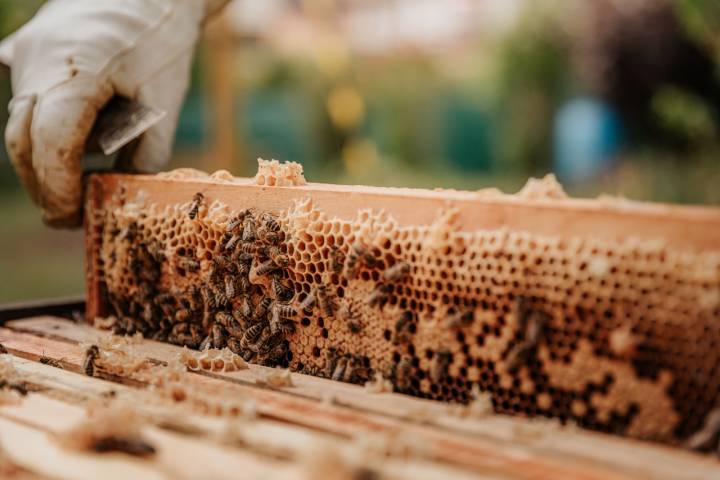
- Use professional beekeeping equipment—bee vacs, hive boxes, and protective suits—to keep everyone safe
If extermination is required for safety, especially with aggressive wasps or hornets, we use targeted, professional methods and never rely on indiscriminate spraying.
Learn more about our humane approach on our main Bee Removal Services page.
Why Professional Bee Removal Matters
Trying DIY sprays on a hive in your wall or roof can go wrong very quickly:
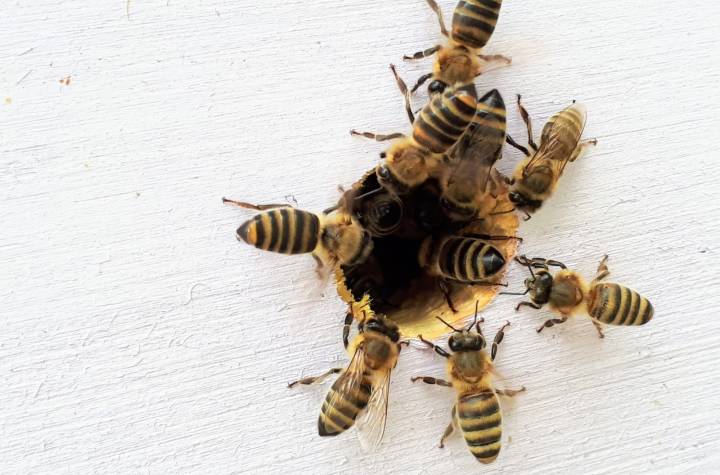
- Thousands of stinging insects may defend the nest if they feel threatened.
- The colony often extends deep inside the structure—far beyond what you see on the surface.
- Over-the-counter insecticides rarely reach the entire hive and can leave behind contaminated honey and wax.
Extension specialists in Pennsylvania explain that when honey bees nest inside walls or roofs, all comb and honey should be removed, because leftover material continues to attract new swarms and other pests to the same cavity (Penn State Extension, 2024).
Similar guidance from North Carolina Cooperative Extension notes that successful honey bee removal from structures usually requires accessing the cavity, physically removing the colony and comb, and then sealing the entry points; simply killing bees without cleanup often leads to repeat infestations (North Carolina Cooperative Extension, 2024).
In short, “spray and hope” is not a real solution. A proper, humane removal is typically safer and more cost-effective in the long run.
Bee & Wasp Services in the Harrisburg Area
We handle much more than a small cluster of bees on a branch. Our Harrisburg-area team can help with a wide range of stinging insect problems.
Live Honey Bee Removal & Relocation
- Safe removal of colonies from homes, offices, barns, sheds, and trees
- Live relocation of viable honey bee colonies to partner beekeepers or apiaries
- Removal of old comb, honey, and debris to minimize staining, odors, and re-infestation
Our Live Bee Relocation process is designed to protect both your property and the bees.
Wasp, Yellow Jacket & Hornet Nest Removal
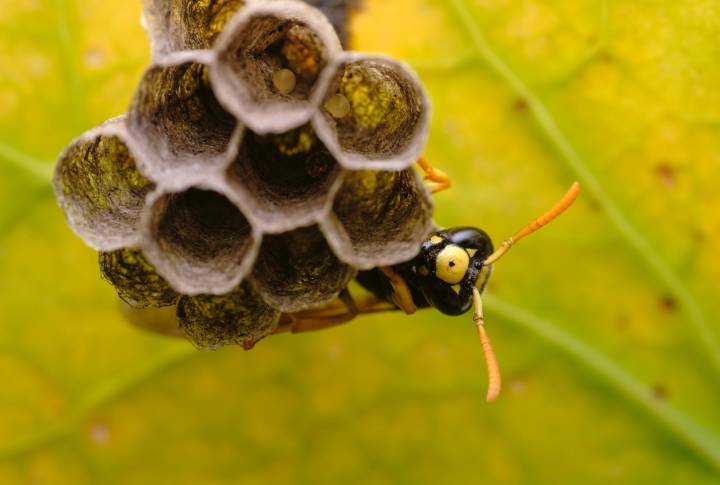
Wasps and yellow jackets can be extremely aggressive—especially when nests are near doors, decks, or kids’ play areas. Our technicians:
- Locate and treat nests in eaves, soffits, chimneys, wall voids, trees, and ground burrows
- Use professional formulations and equipment not available to the general public
- Focus treatments directly on the nest for fast, effective results
If you’re seeing wasps building paper nests or yellow jackets disappearing into a wall crack, our Wasp Removal team can help restore safety quickly.
Carpenter Bee Control
Carpenter bees drill into wood trim, soffits, decks, and porch rails. Over time, this can:
- Weaken structural or decorative wood
- Attract woodpeckers seeking larvae
- Cause staining from frass and droppings
We identify carpenter bee galleries, treat active tunnels, and recommend wood repair and sealing strategies to prevent future damage.
Beehive Removal, Cleanup & Repair Coordination
A complete job doesn’t end when the bees are gone. We can:
- Open necessary areas (with your approval) to access the full hive
- Remove comb, honey, and dead bees
- Apply materials that help reduce lingering pheromones
- Coordinate or refer you to contractors for structural and cosmetic repairs as needed
This “remove + clean + close” approach aligns with university recommendations for safe structural bee removal (North Carolina Cooperative Extension, 2024).
Inspections, Prevention & Bee-Proofing
Not sure what you’re dealing with? We offer:
- Visual inspections and, when needed, tools to help locate hidden hives
- Identification of honey bees, bumble bees, wasps, hornets, or other stinging insects
- Recommendations to seal gaps, repair openings, and reduce nesting opportunities
Our Bee Removal Process in Harrisburg – What to Expect
Whether you’re in Midtown, Shipoke, or across the river in Camp Hill, our process is designed to be predictable, safe, and transparent:
-
Call & Consultation
You call (833) 233-7233 or submit our online Contact form. We ask a few quick questions and may request photos to understand location, access, and urgency. -
On-Site Inspection
A trained beekeeper or technician inspects the site, identifies the insect, and locates the nest or hive. We explain your options—including humane relocation whenever it’s practical. -
Safe Removal or Treatment
For bees, we carefully access the hive, collect bees using specialized equipment, and transfer them into hive boxes for relocation. For wasps and hornets, we perform targeted nest treatments that minimize impact to the rest of your property and local pollinators. -
Clean-Up & Bee-Proofing
We remove hive material, discuss repair options, and recommend sealing or reinforcing the area to prevent future nesting. -
Follow-Up Support
After service, we remain available to answer questions and, where applicable, discuss warranty or additional prevention steps.
Bee Season in Harrisburg & Central Pennsylvania
Harrisburg’s four-season climate creates a clear bee and wasp activity cycle:
- Spring–early summer (April–June): Honey bee swarming peaks as colonies divide and reproduce. Educational resources from Penn State Extension on common bees and wasps explain that swarms are usually temporary clusters looking for a new home (Penn State Extension, 2024).
- Summer: Established hives in walls, roofs, and trees grow rapidly. Yellow jackets and other wasps become more active around outdoor eating areas and trash.
- Fall: Bees prepare for winter, while wasps and yellow jackets can become more aggressive as food sources decline.
If you see a swarm resting on a branch, fence, or building, don’t spray or knock it down. Swarms can often be safely collected and relocated by professionals.
Where We Provide Bee Removal Near Harrisburg, PA
When you’re searching for “bee removal Allentown,” you want more than someone with a spray can. With Bee Safe Bee Removal, you get:
- Harrisburg neighborhoods: Downtown, Midtown, Shipoke, Uptown, Allison Hill, Bellevue Park, and more
- Surrounding communities: Colonial Park, Paxtang, Linglestown, Oberlin, Progress, and Enola
- West Shore & beyond: Camp Hill, Lemoyne, New Cumberland, Mechanicsburg, plus other nearby Central PA towns
If you’re within reasonable driving distance of Harrisburg, chances are we can help. Call (267) 500-8873 to confirm service at your address.
How Much Does Bee Removal Cost in Harrisburg?
Pricing depends on several factors:
- Location of the hive or nest (tree, ground, wall void, chimney, roof, etc.)
- Height and difficulty of access
- Whether we must open walls or ceilings and coordinate repairs
- Size and age of the colony or nest
Extension resources note that established honey bee colonies inside structures can contain significant amounts of honey and wax, which increases cleanup and repair needs (Penn State Extension, 2024; North Carolina Cooperative Extension, 2024).
We always:
- Provide clear, upfront estimates before work starts
- Explain your options, including live relocation where possible
- Help you understand if structural repairs are likely and what that might involve
For a more precise estimate, share photos and a description via our Contact form or call (267) 500-8873.
Safety, Allergies & Stings
Most stings cause localized pain, redness, and swelling, but for people with allergies, reactions can be much more serious. Guidance for outdoor workers from the CDC’s NIOSH insect and scorpion information recommends washing the sting site, removing the stinger, applying ice, and monitoring for signs of allergic reaction (CDC, 2024).
Because anaphylaxis can develop quickly, especially in sensitized individuals, medical references emphasize the importance of emergency treatment when symptoms like difficulty breathing, throat tightness, or widespread hives appear (CDC, 2024).
Professional removal helps reduce the risk of repeated stings around high-traffic areas like doors, decks, and play spaces.
Trusted, People-First Bee Removal
Bee Safe Bee Removal is known for:
- Extensive experience handling honey bees, wasps, hornets, and carpenter bees
- A commitment to ethical, eco-friendly bee management, aligned with pollinator-protection efforts in Pennsylvania and beyond (Pennsylvania Department of Agriculture, n.d.)
- Clear communication before, during, and after each job
You can read real customer stories on our Reviews page and explore educational tips and case studies on our Blog.