Gilbert’s tree-lined streets, irrigated greenbelts, and backyard pools make it one of the most attractive places in the East Valley—not just for families, but for bees and wasps too. Warm weather nearly year-round and desert landscaping full of flowering plants mean swarms can show up almost any month in Gilbert (Town of Gilbert).
When a hive settles in your block wall, attic, or patio cover, it’s more than a nuisance—especially with aggressive Africanized “killer” bees common throughout Arizona (Bee Safe – Killer Bees in Arizona).
Bee Safe Bee Removal is a team of professional beekeepers who specialize in live bee removal and relocation, never careless extermination. Our Arizona crews provide fast, eco-friendly bee and wasp removal across the Phoenix metro, including Gilbert and the East Valley (Bee Safe Bee Removal).
Why Bees Are So Active in Gilbert’s Desert Neighborhoods

Gilbert sits in the Sonoran Desert, where mild winters and hot summers mean bees can stay active much longer than in colder states. Research on desert gardening shows that irrigated yards and community gardens actually increase bee abundance compared to surrounding natural desert, because they provide flowers and water all season long (Gotlieb et al., 2011; Gotlieb et al., 2011).
On top of that:
- Native desert plants & xeriscapes – Palo verde, desert willow, sennas, and many recommended landscape plants in Gilbert’s own water-wise plant lists are magnets for bees and other pollinators (water-wise plant list).
- Over 1,300 native bee species in Arizona – Arizona has one of the highest bee diversities on the planet, with around 1,300 native species plus managed honey bees (Arizona State Parks & Trails, 2024; Pollinator Partnership, 2011; Arizona State Parks).
- Pools, fountains & irrigation leaks – In hot months, bees seek reliable water sources. That’s why you often see them around pool edges, irrigation valves, and pet water bowls in Gilbert (Maricopa County bees brochure).
Pollinators are absolutely vital here. Guides for the Arizona–New Mexico region show that crops common in our broader desert region—watermelon, cotton, chile pepper and alfalfa, among others—depend heavily on honey bees and native bees for pollination (Pollinator Partnership, 2024; Pollinator Partnership regional guide).
The bottom line: Gilbert’s thriving desert-urban mix is perfect for bees. That’s good for gardens and agriculture—but it also means you need a reliable, humane removal team when a colony chooses the wrong spot.
Why Live Bee Removal Matters in Gilbert, AZ
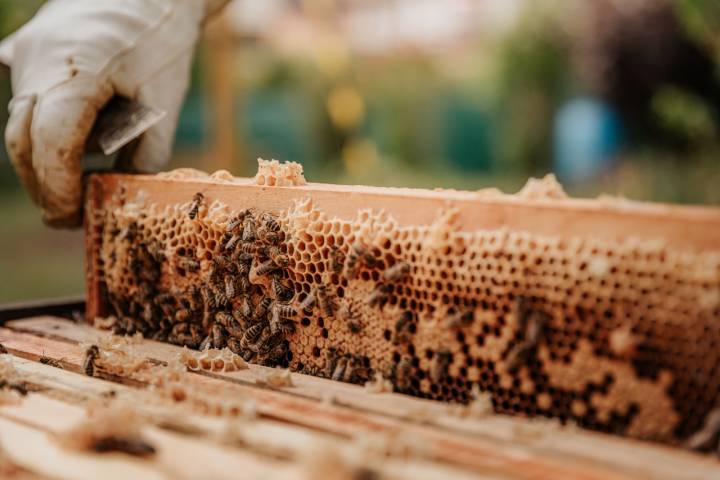
Modern pollinator science is clear:
- Bees and other pollinators help reproduce roughly three-quarters of flowering plants and contribute to about one out of every three bites of food we eat (Pollinator Partnership, 2011; Xerces Society, 2015; Arizona bee guide).
So when bees settle in your roofline or wall, killing the colony outright isn’t the only option—and it’s rarely the best one.
Our Promise to Gilbert Homeowners
Bee Safe Bee Removal is built on a simple philosophy:
- Relocate, don’t exterminate, whenever it’s safely possible.
- Protect people first, then protect bees and property.
- Use methods designed by beekeepers, not just pest sprayers. (Bee Safe Bee Removal)
Our technicians use specialized bee vacuums and transport boxes to collect live bees and relocate them to managed apiaries, where they can keep doing what they do best—pollinating and making honey—instead of becoming a recurring problem on your property (bee removal details).
If you’d like to dig deeper into the environmental side of bee work, visit the Bee Safe Bee Removal blog to read articles like “Why Are Bees Important?” and “3 Reasons to Choose Bee Removal Over Extermination.”
Bee & Wasp Services in Gilbert, AZ
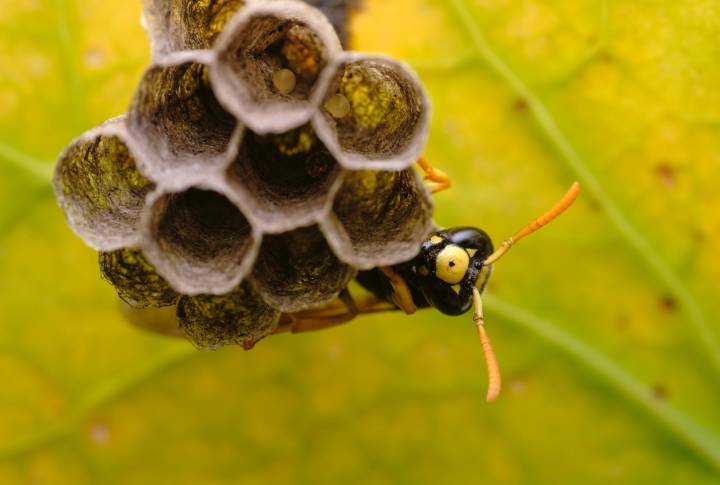
Even though Gilbert isn’t listed as a separate city page on the Bee Safe site yet, our Phoenix-area Arizona team responds to calls across the East Valley—Gilbert included (Arizona service areas).
Live Honey Bee Removal & Relocation
If you’re seeing a swarm hanging from a tree branch or light fixture, or bees constantly entering a crack in your wall, we can:
- Safely capture the colony using professional beekeeping equipment
- Remove honeycomb, brood, and honey so the bees don’t come back
- Relocate the bees to a hive managed by local beekeepers
Learn more about our humane bee removals on the main Bee Removal information page.
Wasp, Hornet & Yellow Jacket Nest Removal
Paper wasps under eaves, yellow jackets in the ground, or hornets in shrubs can make patios and play areas unusable. Bee Safe technicians:
- Identify the species
- Use professional-grade products not sold in stores and PPE to treat nests safely
- Focus on targeted nest treatments instead of broad, risky spraying
You can read more about wasp control on our Wasp Nest Removal service page.
Carpenter Bee Inspection & Control
Carpenter bees can tunnel into exposed wood such as pergolas, fascia boards, and porch beams—common features on Gilbert homes. Bee Safe can:
- Inspect wood structures for carpenter bee activity
- Recommend targeted treatments and exclusion options
- Help protect your wooden features from further damage (Bee Safe on LinkedIn)
Honeycomb Removal & Structural Repair
Leaving honeycomb inside a wall or roof after a spray treatment is a recipe for melted honey, ants, rodents, and lingering odor. Bee Safe’s full-service approach includes:
- Locating and accessing the hive (walls, soffits, attics, block walls, meter boxes)
- Removing bees and comb
- Cleaning and sealing the cavity to help prevent re-infestations (honeycomb removal info)
Emergency & Same-Day Services
Because bees in Arizona can stay active for much of the year, Bee Safe maintains sun-up to sun-down phone coverage and often provides same-day or 48-hour removals, depending on scheduling and job complexity (about Bee Safe).
Our Bee Removal Process for Gilbert Homeowners
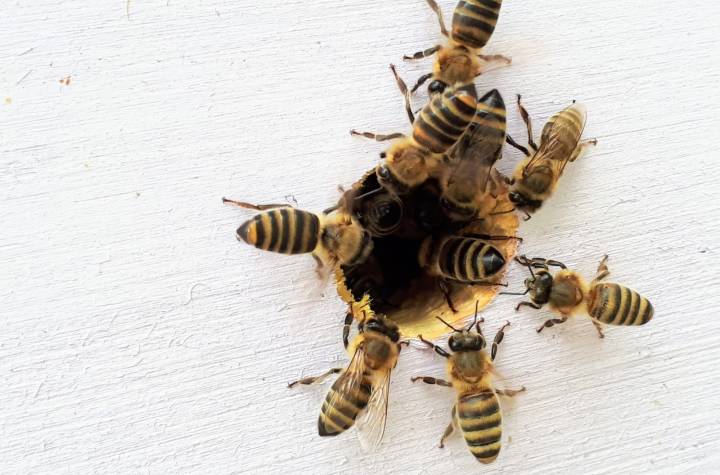
Every job in Gilbert follows a carefully tested process designed around safety, thoroughness, and long-term results:
-
Phone Consultation & Free Estimate
You describe what you’re seeing (photos help). Our office staff explains options and gives an estimate range based on location, height, and access—exactly the cost factors outlined in our national bee removal cost guide (bee removal cost guide). -
On-Site Inspection in Gilbert
The beekeeper confirms the species (honey bees vs. wasps or hornets). We use experience and, when needed, tools like thermal imaging to locate hidden hives (Arizona locations). -
Live Removal & Hive Access
For honey bees, we open up the area only as much as needed, then use a bee vacuum or bee box to capture the colony alive (live bee removal). For wasps or hornets, we apply highly targeted treatments and remove or bag the nest (wasp removal). -
Comb Removal, Clean-Out & Sealing
All comb and honey are removed from accessible spaces. The cavity is scraped, cleaned and, where appropriate, sealed to reduce odors and pheromone trails that attract new swarms. -
Repair Options & Prevention Tips
We discuss repair options or coordinate with your contractor if more extensive rebuilding is planned. You’ll receive prevention tips and links to helpful resources like our article on DIY bee removal precautions—which explains why doing it yourself is dangerous and often ineffective (DIY bee removal precautions).
Bee Removal Cost in Gilbert, AZ
How Much Does Bee Removal Cost?
Most bee and wasp jobs in Gilbert typically fall somewhere between $199 and $999+, depending on what we find on-site. Bee Safe’s own national cost guide explains that prices are driven by three primary factors (bee removal pricing overview):
-
Location of the bees
Exterior tree branch or fence, block wall, meter box, or ground void, or inside a wall, soffit, chimney, or roof. -
Size of the hive or swarm
A small, newly arrived swarm costs less than a large, established colony with heavy honeycomb. -
Height & difficulty of access
Ground-level removal is simpler than a steep-roof or second-story job that requires special ladders or roof work.
Other factors that can affect price include:
- Emergency or after-hours requests
- Whether structural repairs or extensive honeycomb removal are needed
- Complex locations (stucco cut-outs, tile roofs, tall palm trees, etc.)
Good news for Gilbert homeowners:
- Bee Safe offers free estimates before work begins (Phoenix bee removal).
- Arizona customers often benefit from same-day or 48-hour scheduling, which keeps hive growth—and cost—down (live bee removal).
Common Bee & Wasp Issues We See in Gilbert
Because of Gilbert’s housing styles and landscaping, we frequently remove:
- Honey bee colonies in stucco and block walls
- Swarms hanging from mesquite, citrus, or palm trees
- Bees nesting in irrigation valve boxes and water meter boxes
- Paper wasp nests under eaves, patio covers, and play structures
- Africanized “killer” bee colonies that suddenly become very defensive near high-traffic areas (killer bee info)
Africanized honey bees are now widespread in central and southern Arizona; they look almost identical to European honey bees but respond more aggressively when disturbed. That’s why experts strongly recommend calling professionals rather than spraying or swatting a hive yourself (danger of killer bees).
Making Your Gilbert Yard Safer and Pollinator-Friendly
You don’t have to choose between a safe yard and supporting pollinators. Science-based guidance from pollinator organizations suggests that even small patches of native plants can significantly help bee populations, as long as they are placed thoughtfully around homes (Xerces Society, 2015; Majewska & Altizer, 2020; Xerces pollinator plant lists).
Practical Tips for Gilbert Homeowners
- Plant desert-adapted, pollinator-friendly species like desert marigold, chuparosa, firecracker penstemon, and native milkweeds in landscape beds away from doors and main walkways (pollinator-friendly plant lists).
- Provide water safely by using shallow dishes with pebbles on the far side of the yard, so bees drink there instead of from your pool steps.
- Seal structural gaps around rooflines, vents, and stucco cracks to reduce attractive nesting spots.
- Avoid broad, routine insecticide spraying, which can harm beneficial bees and other insects more than the pests you’re trying to control.
For more ideas tailored to our region, check out the Pollinator Partnership’s planting guides for Arizona and New Mexico and the Arizona bee identification guide, which both highlight how desert homeowners can support pollinators responsibly (Arizona–New Mexico pollinator guide).
Get a free estimate with just one click!
We are eco-friendly, fast and affordable. All of our inspections are 100% free. Our expert removal teams do whats best for you and the environment. That is why our customers love us. Call now to book your appointment today.
Call Now!Honey bees are nature's pollinators and a crucial part of our environment, which is what makes their recent population decline so important. The most commonly known cause for this is the use of pesticides to drive them out of unsuitable places, like people's home or business. There are other ways, however, that you can rid yourself of your bee infestation without killing the hive.
At Bee Safe Bee Removal, our professionally trained beekeepers will safely relocate the bees without harming them or posing any risk to your property.
Having a beehive on your property can not only pose a life-threatening risk to you or your family, especially if there is someone who is allergic to their stings, but it can also pose a risk to the structure of your home or business. This is why it is very important to contact a professional beekeeper as soon as you see any bee activity on your property so they can be removed before they become a huge problem. If bees decide to build a hive inside the structure of your property, the melted wax and honey will attract other unwanted pests as well as destroy your building structure.
At Bee Safe Bee Removal, our bee removal technicians will use state-of-the-art thermal devices to detect where the beehive is located. From there, they will present you with various affordable options you can choose to remove the bees depending on your price point. The beekeeper will then use professional gear to safely remove your bee infestation without any harm to you or your property.
After bee removal, any honey leftover is yours to keep! It's important to remember never to attempt a beehive removal on your own as one hive can house up to fifty thousand bees. Numerous bee stings can be dangerous so it's always the best choice to work with a professional pest control company or beekeeper to aid you in removing your bee infestation safely and efficiently.
At Bee Safe Bee Removal, we use various safe and humane methods for the removal of beehives that are completely harmless to bees and to your property. Give us a call today at (833) 233-7233, we offer same-day bee removal.
Paying a professional bee removal service to remove bees from your home or business can save you so much more money than attempting the do it yourself approach.
At Bee Safe Bee Removal, our professional beekeepers will not only protect you during the removal process but the bees as well, who are relocated to a safer place where they can continue to pollinate and contribute to our environment.
Attempting to remove a beehive yourself will not only cost you money in collecting the proper safety and removal gear, but can also lead to unplanned hospital bills if you're allergic or stung too many times. Not only is the do it yourself process a risk to your health, it's also a risk to your property, especially if you don't know what you're doing.
Contacting our bee experts at Bee Safe Bee Removal will not only save you more money than the do it yourself bee removal approach, it will also protect you, your loved ones, and your home or business. Key factors affecting the cost of a bee removal:
-
Location of the beehive There are many factors that contribute to the cost range of removing a hive from your property, the first one being where the hive is located. Our expert beekeepers will use state of the art thermal imaging to locate the beehive on your property. The easier our pest control professionals can get to the bees, the more affordable the job will be.
Likewise, if the bees are in a difficult location to reach, such as in a high tree, behind siding, or inside the walls of your property, then the price will understandably be higher. It is also important to note that local laws may consider bees in a home's structure to be a health and safety issue and should be removed quickly to avoid legal complications.
-
Number of bees in the hive Another factor that determines the cost is the size of bee infestation and how many bees are housed inside the hive. Honey bees like to build their colonies inside or on structures, including your house or yard. Bumble bees prefer to build their hive in the ground and carpenter bees like to burrow into wood structures.
The number of bees affects the price in that one hive could potentially house up to fifty thousand bees, which would take time to remove. Once the bees are located, our beekeeper will present you with different removal options. Removing bees may include cutting holes into the wall or ceiling of your structure as well as repairing it after the bees and hive are removed.
If our bee removal team finds a dead hive inside the structure of your home or business, they will not only have to remove the hive, dead bees, and honey dripping, they might also have to remove any other pests that were attracted to the honey and the damaged structure around that.
-
Swarm vs. Hive If the bees have not made their nest inside your property and are simply swarming outside, our beekeepers would smoke the bees inside an apiary box and relocated them to a safer place, which tends to be our more affordable option.
If you've noticed bees lingering around your home or business, they've likely made their hive somewhere close. If this is the case, do not attempt to remove them yourself, as this can pose a dangerous risk to you or your family.
Our certified and experienced beekeepers at Bee Safe Bee Removal will safely and efficiently take care of your bee infestation with the appropriate safety gear and removal method. Even though they are small, bees can become quite aggressive and one hive can contain thousands of bees that will attack if they feel threatened.
For professional removal services, call Bee Safe Bee Removal today at (833) 233-7233, we offer same day service and will get rid of your bee issue in no time! If left unattended, beehives can quickly grow in number and become a danger, not only to your family, but to your property as well.
They can create a life-threatening situation to someone who is allergic to their venom or if they are stung multiple times. If a beehive is left inside the walls of your structure, the honey can seep into the walls and not only destroy your home or business, but attract other unwanted pests as well. If you require bee removal in Dallas, Bee Safe Bee Removal will get the job done quickly and affordably.
Our years of experience and customer satisfaction and safety allow us to be one of the top-rated bee removal companies in the area. Not only do we take care of your bee infestation, we can also help with bee control, full hive removal, bee proofing, Africanized bee control, yellow jacket removal, wasp removal, and protection against bumblebees and other stinging insects.
One hive can contain thousands of bees and removing them yourself can pose a life-threatening risk. Bee Safe Bee Removal will take care of your beehive safely and efficiently. Call Bee Safe Bee Removal today, before your bees become a real danger. Here is the list of questions you need to ask when finding a local professional beekeeper:
-
How many years of experience do you have removing bees? This will help you weed out novice beekeepers. We suggest looking for companies with more than 10 years experience.
-
Are you state licensed for pest control? This is important. Should the beekeeper find it necessary to apply pesticide to keep bees from returning, they are required by law to carry the appropriate license.
-
Are you highly rated by the Better Business Bureau, Yelp and Google? The more positive reviews a bee removal company has, the better.
-
What is your warranty? Reputable bee removal companies will offer a warranty. Be careful of companies that do not have a service warranty.